
Hanuman Stories for Children: 7 Adventures and Their Lessons
Sleepysaga Team · August 31, 2026
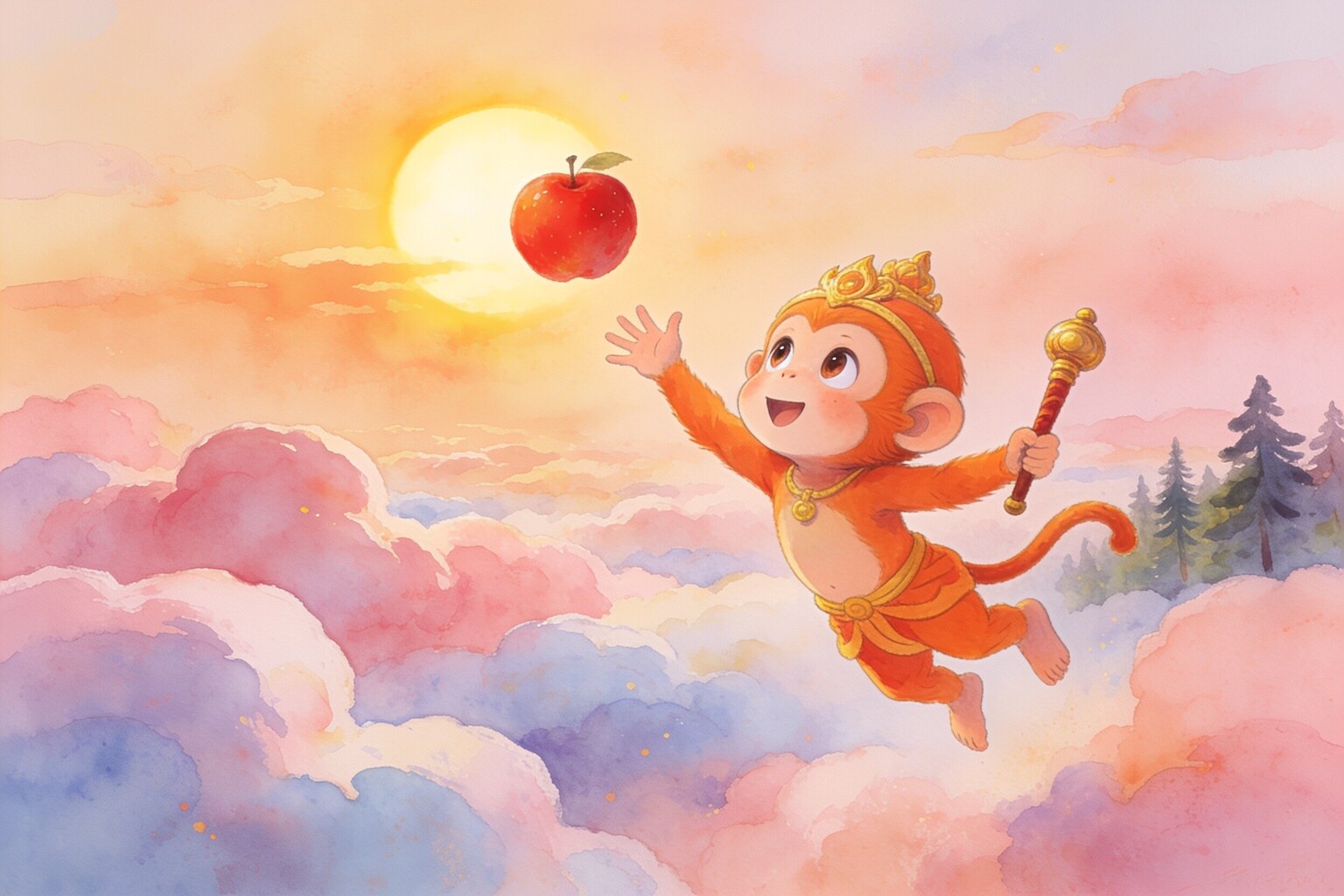
Every culture has a hero children reach for when they need to feel brave. For millions of families, that hero has a tail.
Hanuman — son of the wind god Vayu, devoted friend of Rama, and the beating heart of the Ramayana — has been a children's favorite for centuries, held up in tradition as the very model of loyalty and devotion.[1] But what makes his stories work so well for young kids is something simpler: Hanuman starts out as a mischievous, hungry, over-curious little monkey who makes big mistakes — and grows into the bravest helper in the story.[2] That arc, from naughty to noble, is one children instinctively see themselves in.
And the research backs the instinct: stories where a child is invited to be like the hero measurably increase honest, helpful behavior in preschoolers — more than announcing the moral ever does.[3] [4] Hanuman gives you seven chances to make that invitation.
The adventures, and what each one teaches
1. Baby Hanuman and the Red Fruit
Hungry baby Hanuman looks up at dawn, mistakes the rising sun for a ripe red fruit, and leaps into the sky to grab it.
What it teaches: curiosity is not a flaw. The most famous mistake in Indian mythology is made by a baby who simply wanted to touch something beautiful. Children — especially the ones forever climbing things they shouldn't — hear that big wanting and big reaching are part of how remarkable people begin.
2. The Broken Pots
Young Hanuman can't stop using his powers for pranks — interrupting the forest sages' prayers, upending their pots, causing gentle chaos. Instead of punishing him harshly, the sages give him a quieter consequence: he will forget how strong he is until someone reminds him.
What it teaches: actions have consequences, and correction can be kind. There's no rage in this story, just a gentle boundary that shapes the rest of Hanuman's life. It's a lovely mirror for how you'd want discipline to feel at home — firm, calm, and never about making a child feel bad.
3. The Walking Lesson
Hanuman asks Surya, the Sun God, to be his teacher. Surya can't stop moving across the sky — so Hanuman flies backward in front of him, all day, every day, until his lessons are complete.
What it teaches: learning takes effort, and effort can be joyful. Nobody makes Hanuman do this. He wants to learn badly enough to invent an absurd, wonderful way to do it. For a child grumbling about practice — reading, riding a bike, anything — this is the story.
4. The Great Leap Across the Ocean
Rama's search party reaches the edge of the sea. Lanka is a hundred miles away and every heart sinks — until wise old Jambavan turns to Hanuman and reminds him of what he has forgotten: you have been strong enough all along. Hanuman grows to the size of a mountain and leaps across the ocean.
What it teaches: sometimes we forget our own strength, and the right words from someone who believes in us can bring it back. This is the emotional center of the whole Hanuman cycle — and arguably one of the best self-belief stories ever told for children who say "I can't."
5. Finding Sita in the Whispering Garden
Arriving in Lanka, the mountain-sized Hanuman shrinks himself small — small enough to slip unseen through the Ashok Vatika garden, find the grieving Sita beneath a tree, and quietly give her Rama's ring as proof that help is coming.
What it teaches: being small can be a superpower, and hope is something you can carry to someone. The hero of the giant leap wins here by being tiny, gentle, and careful. Small children — who are, after all, small — notice.
6. The Flying Mountain
Lakshman lies gravely wounded, and only a glowing healing herb from a far Himalayan mountain can save him before sunrise. Hanuman flies there — but can't tell one glowing plant from another. So he lifts the entire mountain and carries it back.
What it teaches: when you don't know the perfect answer, give your whole effort anyway. Hanuman doesn't freeze because he can't identify the herb. He finds the version of the problem he can solve, and solves it completely. That's problem-solving resilience, in one unforgettable image.
7. The Open Heart
At Rama's coronation, courtiers mock Hanuman for cracking open a gifted pearl necklace, pearl by pearl, "looking for Rama inside." In answer, Hanuman opens his own chest — and there, inside his heart, are Rama and Sita.
What it teaches: what you love lives inside you. It's the most tender story in the cycle, and children take from it exactly what they're ready for — for most, simply that loving someone means carrying them with you, even when they're not in the room.
How to tell them at bedtime
Told in order, these seven adventures form one long arc — a naughty baby who becomes the most trusted friend in the world — which makes them ideal for a story-a-night week. Keep Lanka's scarier corners soft, let the leaps and flights be as big as your child's imagination, and end each story the way the research suggests: not with "the moral is," but with "What would you have done?"
If you'd rather have them told for you, our Hanuman Tales collection follows the full journey across fourteen gentle, bedtime-paced stories — from his very first blessing to his promise to watch over everyone who loves Rama — in both English and Hindi, free to read.
Frequently asked questions about Hanuman stories for kids
What age are Hanuman stories appropriate for?
The childhood stories — the sun-fruit, the broken pots, the walking lesson — work from around age 3. The Lanka adventures land best from 5 up, in retellings that keep the peril mild and the rescues front and center. The burning of Lanka and the battle stories are easiest for sensitive kids in versions where cleverness, not violence, carries the day.
Which Hanuman story should I start with?
The red fruit. A hungry baby leaping at the sun needs no setup, gets a laugh, and instantly establishes the two things that define Hanuman: enormous power and an innocent heart.
Why did Hanuman forget his powers, and why does it matter?
As a child he used his strength for pranks, so the forest sages gave him a gentle consequence: he'd forget his powers until someone reminded him. It matters because it sets up the ocean leap — the moment Jambavan's belief unlocks what was there all along — which is the single most useful Hanuman story for a child who doubts themselves.
Are Hanuman stories too scary for young children?
Most aren't — the majority of his adventures are about leaping, learning, finding, and helping. A few episodes (the burning tail, the underworld rescue) have more intensity, and gentle retellings handle these by focusing on Hanuman's cleverness and the safe outcome rather than the danger.
Do these stories only make sense with religious context?
No. Like Hercules or Thor, Hanuman works purely as a hero tale — a flying monkey with a giant heart, impossible strength, and total loyalty to his best friend. Families bring as much or as little of the devotional layer as fits their home.
Related reading
- Best Krishna Stories for Kids (and What Each One Teaches) — The other great hero of Indian bedtime storytelling, story by story.
- The Power of the Bedtime Story — Why the nightly ritual itself matters as much as the tale you pick.
Sources & further reading
Hanuman and the Ramayana
How stories teach children values
Want more articles like this, every week?
Research-backed parenting tips, straight to your inbox. No spam, unsubscribe anytime.